
A look back at some of Ferrari’s most memorable moments at the Italian Grand Prix.
In summary
- Ferrari has delivered some of Monza's most memorable moments for the Tifosi, from 1988 through to 2019.
- Michael Schumacher, Fernando Alonso and Charles Leclerc each won the Italian Grand Prix for Ferrari in their debut season with the team.
- Gerhard Berger and Michele Alboreto's emotional 1-2 in 1988 came just a month after the passing of Enzo Ferrari.
The Italian Grand Prix is one of the oldest races on the F1 calendar. It was part of the first World Drivers’ Championship in 1950, and Monza was the venue – just as it still is in 2026. For more than 70 years thousands of passionate Italian Ferrari fans – the ‘Tifosi’ – have been making the pilgrimage to the Autodromo Nazionale Monza (more popularly known simply as the 'Temple of Speed'), hoping to be there in person to witness the Prancing Horse winning in Italy.
Few would disagree that the loudest and proudest of F1 fans are those who line the Monza grandstands each year for the Italian Grand Prix – a Ferrari victory on Italian soil is always a momentous occasion. So, as we get ready for this year’s race, let’s look back at some of the most memorable moments at the famous Italian track for the Prancing Horse.
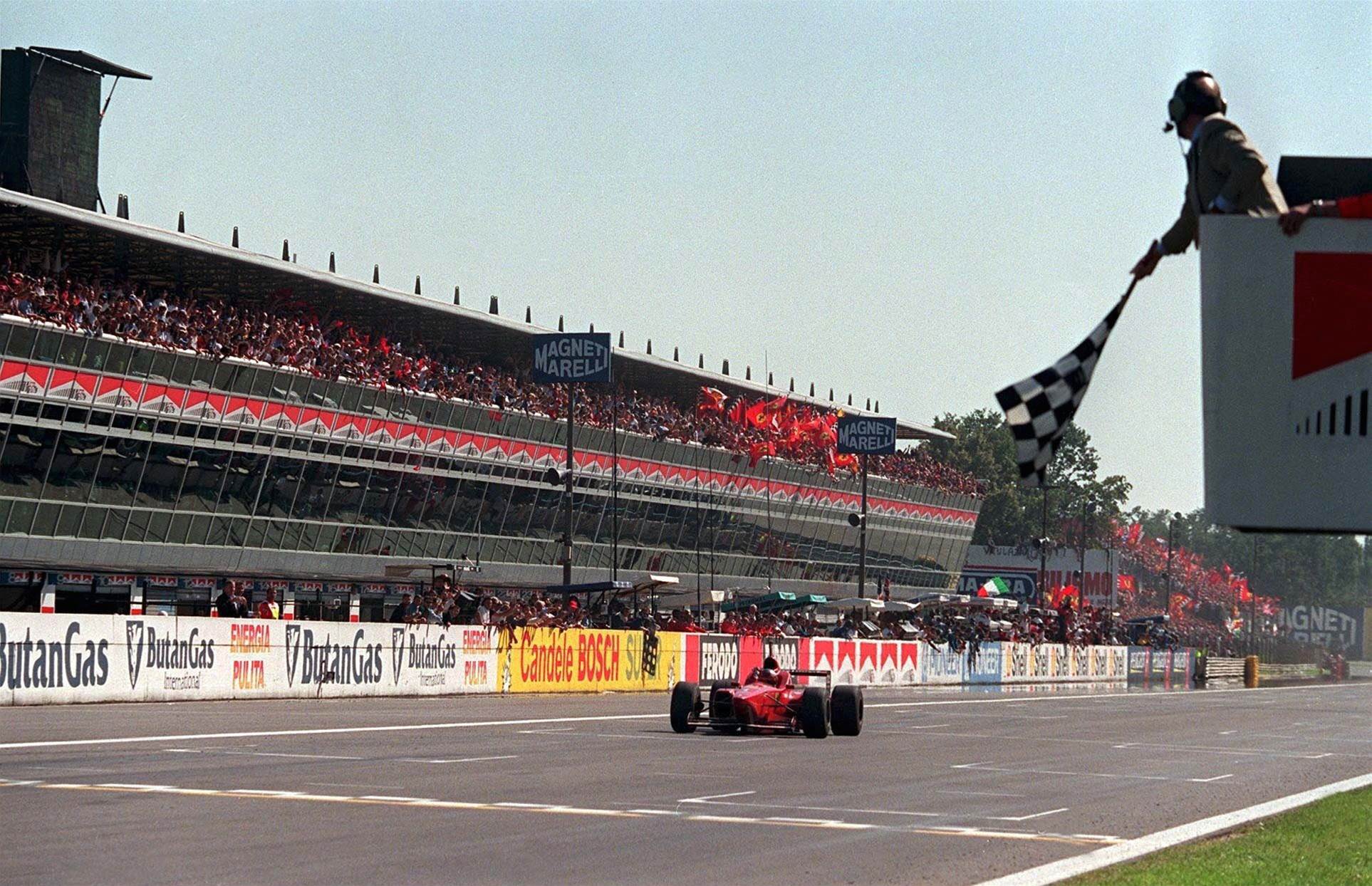
1996: SCHUMACHER SUCCESS IN SEASON 1
In his first season for Ferrari, Michael Schumacher brought success for the first time at Monza for the Prancing Horse since 1988. It was the breaking of a winning drought that had spanned almost a decade, and no sooner had the chequered flag fallen that thousands of F1 fans breached the Monza track to run to the podium in an outpouring of joy and emotion.
A year earlier the Tifosi had been far less effusive over Schumacher. The announcement during the ’95 Italian Grand Prix race weekend that the German ace had signed a reported US$25 million contract for the 1996 season was not met with a warm reception from the Tifosi.
Schumacher would be replacing fan favourite, Jean Alesi. At every chance, Italian fans booed Schumacher - and they were pleased with his final race result, as Damon Hill collided with Schumacher, leaving both unable to finish. Furious with what occurred, Schumacher jumped out of his Benetton and charged towards Hill’s Williams to confront him.
Come the end of the season, and Ferrari could only muster third in the Constructors’ Championship. Both Alesi and team-mate Gerhard Berger would be replaced, with Eddie Irvine joining Schumacher for 1996. However, Schumacher and Irvine could only manage second for Ferrari in a season dominated by Williams, with Damon Hill and Jacques Villeneuve collectively winning 12 of the 16 races.
Of the remaining four races, Schumacher won three: Barcelona, Spa and finally Monza. Qualifying did not go to plan for Schumacher, as a familiar tale of the season was told, with Hill and Villeneuve annexing the front row. Schumacher settled for third heading into the race, but his fortunes would change throughout the day, as Hill would bow out on lap five, hitting the tyre pile on the second chicane, while Villeneuve struggled, dropping down to fourth by lap six.
Schumacher sat in second for the first half of the race, trailing behind a familiar name in Jean Alesi, now with Benetton, with the situation fitting, considering the events that had transpired the previous year. Schumacher’s genius was on display heading into his final lap on slicks as he managed a fastest lap with destroyed tyres. Leaving the pits, a resounding 8.8-second stop would show up on screen, 0.2 of a second better than Alesi’s stop. As Schumacher’s Ferrari entered the straight ahead of Alesi, Schumacher took the flag first – to the roar of the same Tifosi fans that had berated him a year earlier.
As the 1995 world champion crossed the finish line to finally end an eight-year drought for Ferrari, Murray Walker called over TV commentary: ‘The Ferrari flags are flying. The Prancing Horses are prancing’.
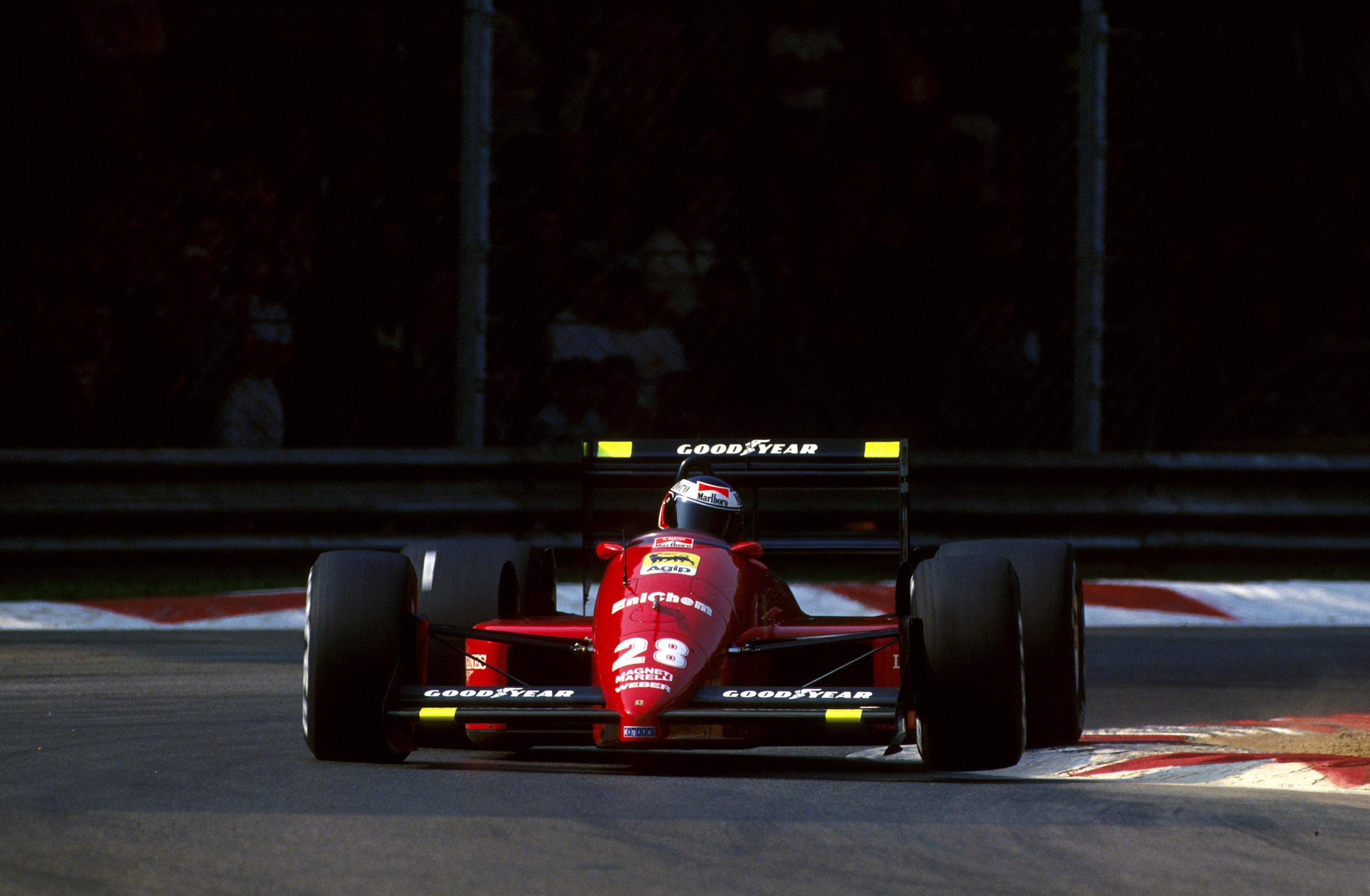
1988: 1-2 FOR ENZO
Returning to the success of 1988, Ferrari’s 1-2 at the Italian Grand Prix is one of the most emotional moments for the Tifosi at Monza. The race result came only a month after the passing of Scuderia Ferrari’s founder, Enzo Ferrari.
But once again, the success came within a season of difficulties that built up throughout the year.
Gerhard Berger and Michele Alboreto entered the season having helped Ferrari to fourth in the constructors the previous year. But if either Ferrari driver fancied their chances in 1988, they were to be disappointed – along with every other driver in the field that wasn’t in a McLaren. The McLaren duo of Ayrton Senna and Alain Prost were untouchable, running away with the Constructors’ Championship after having shared the spoils of every single race win bar one – Monza.
Heading into the Italian Grand Prix, there was no expectation, only mourning, after the passing of Ferrari’s founder. That sadness continued as Marco Piccinini announced his departure as team principal. The expectation was that McLaren would dominate, as it had all season. In qualifying it was business as usual with Senna and Prost 1-2. Berger and Alboreto were just over half a second behind Senna respectively, placing third and fourth.
But come race day, mourning would turn into a celebration of the life of Enzo, a thank you from the Tifosi for all the joyous moments they had felt before, and what could have possibly been a sign of things to come.
The race started as expected. Senna and Prost started well, taking first and second, with both McLarens consistently building on their advantage. But by lap 30, Prost started to have engine issues which saw him drop back eight seconds behind Senna in just two laps, as Murray Walker noted that Prost’s engine was ‘sounding as flat as a pancake’. On lap 34, those fears were realised as Berger overtook Prost for what co-commentator James Hunt recognised was a ‘rare sight this season’, surmising that Berger had ‘no real hope of catching Ayrton Senna’.
A lap later, the unfamiliar sights continued as Prost was in the pits to retire the Honda-powered McLaren the first time that season, with Alboreto moving into third in his Ferrari, to the resounding jubilation of the Tifosi. On lap 49, things would change once more.
From lap 35, Senna had received orders to reduce his pace in order to preserve the engine and prevent similar issues to Prost. Berger and Alboreto saw their opportunity, and reduced the gap to four seconds. Then Senna tangled with the Williams of backmarker Jean-Louis Schlesser. Schlesser attempted to make room for Senna going into the first chicane, but re-entered the racing line as Senna overtook, contacting Senna’s right rear and spinning him onto the kerb. Suddenly Senna was out of the race, as Berger and Alboreto went on to secure a famous 1-2 for the Prancing Horse.
Once again, beyond belief, Murray Walker shouted over commentary in an attempt to match the Tifosi’s adulation: “I am surrounded by a bunch of cheering, gesticulating, shouting, overjoyed Italians and the atmosphere is unbelievable”.
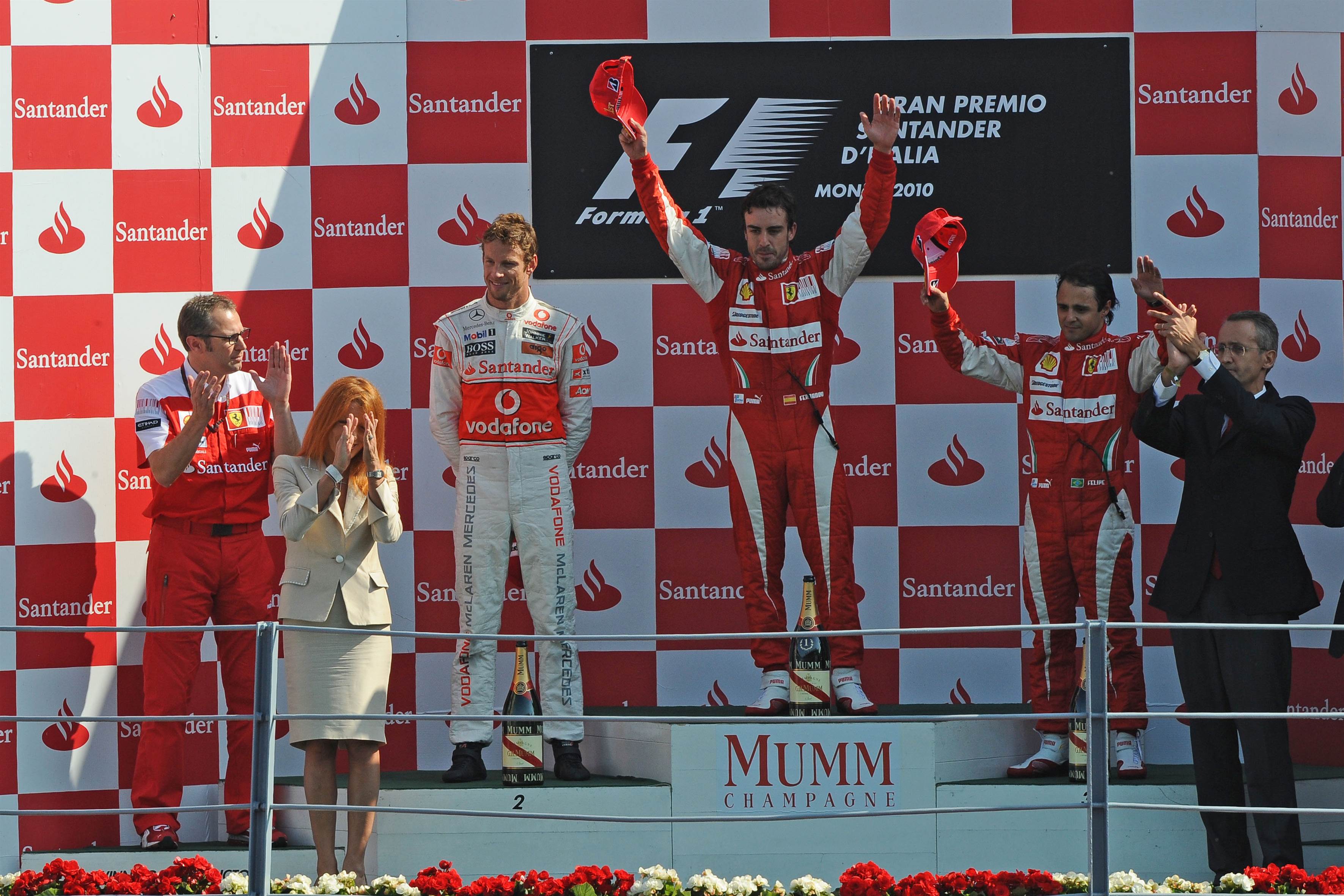
2010: ALONSO AND MASSA IN FERRARI DOUBLE
Another driver who found success at Monza in their first season at Ferrari was Fernando Alonso.
Heading into the 2010 season, Ferrari had dropped off significantly from its 2008 Constructors’ Championship-winning season, finishing fourth in 2009. The Prancing Horse had also not won a home race since Michael Schumacher’s last season at Ferrari back in 2006. Ferrari’s performances had improved in 2010 with Alonso’s introduction, however, the Spaniard picking up five wins that year and losing out to Sebastian Vettel in the Drivers’ Championship by just four points.
It was a different story for Alonso’s team-mate, however. Felipe Massa did not have a stellar year, which culminated famously in Germany where Massa’s engineer Rob Smedley gave the now-infamous order to his driver to surrender his place with the words ‘Fernando is faster than you’. Massa was forced via team orders to give up the lead and his chance at a first race win since Brazil in 2008 – which ultimately became his last in the sport.
The fallout from those events at Hockenheim in July came to fruition leading into the weekend at Monza, as the previously imposed $100,000 fine by the FIA was upheld by the World Motor Sport Council, which decided against any further punishment. At the time, regulations strictly prohibited team orders that impacted race results, with the event subsequently causing the rules to be changed at the conclusion of the 2010 season.
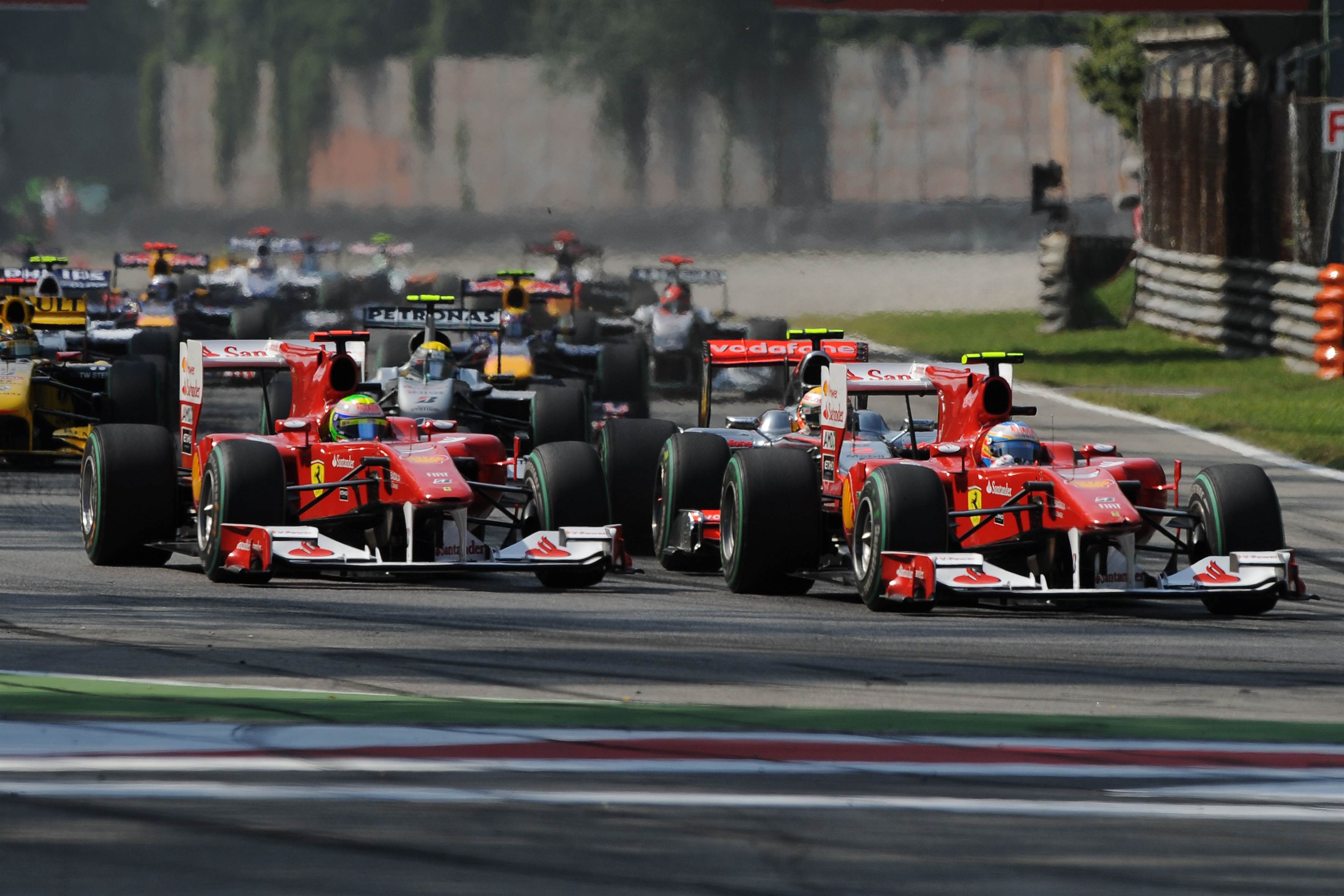
Once the race weekend started, however, Monza went exactly as planned for Ferrari and their drivers. Alonso bagged pole and Massa was third on the grid. Sunday came and so did the race, with the start providing the most entertainment throughout. Jenson Button, qualifying second, had an amazing start, pushing himself past Alonso on the first straight, which put Alonso at further risk from Massa as they made their way around the first chicane. Massa’s failed attempt to overtake Alonso put Hamilton within striking distance, and at turns four and five, Massa and Hamilton made contact, breaking Hamilton’s front right suspension.
Button would hold onto the lead until he pitted for fresh tyres, with Alonso pitting one lap later. The difference in the end would be their pit times, with Button’s stop taking nearly a full second longer than Alonso’s. Coming out of the pits, Button attempted to overtake the Ferrari at the first turn, but the move was never on. Alonso shrugged off Button’s challenge to take home the race win, with Massa following in third. It was Ferrari’s first double podium at Monza since Schumacher and Rubens Barrichello in 2004.
2019: LECLERC’S EMOTIONAL TRIBUTE
In 2019 Charles Leclerc joined Schumacher and Alonso as another driver to win Ferrari’s home race in their first season. Entering the season, Ferrari had not seen a race win at home since the aforementioned double podium of 2010, and had not won a Constructors’ Championship since 2008 or the Drivers’ Championship since 2007 (Kimi Räikkönen).
The team had been through a tumultuous time even by Ferrari standards, battling against the rise of Red Bull and Mercedes in the years that followed, with attempts to return to their best days coming through the change from Alonso and Massa to Räikkönen and Vettel. It is fair to say the strategy behind driver moves was unsuccessful.
If it wasn’t working with established former world champions, then perhaps it was worth having a go with a young, comparative rookie. And so 21-year-old Leclerc was signed to partner Vettel for the 2019 season after an impressive rookie year with Sauber. In a sign of how out of the ordinary this change was, Leclerc had became the youngest Ferrari F1 driver since Ricardo Rodríguez in 1961.
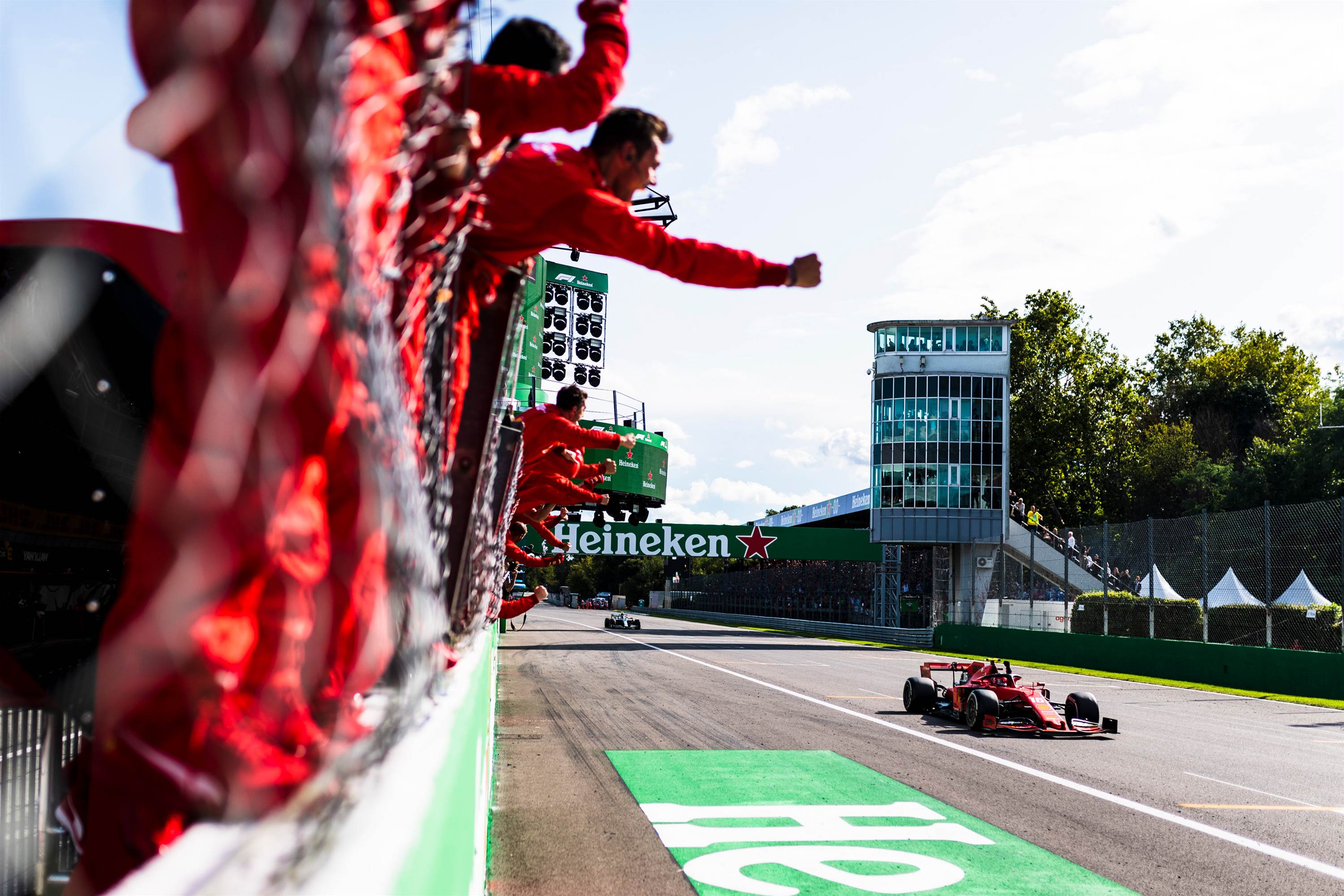
But Leclerc took to Ferrari like a duck to water, completing 18 of the 21 races, finishing no lower than sixth and taking out two wins, back-to-back at Spa and Monza, capping out a fantastic debut season for the Scuderia.
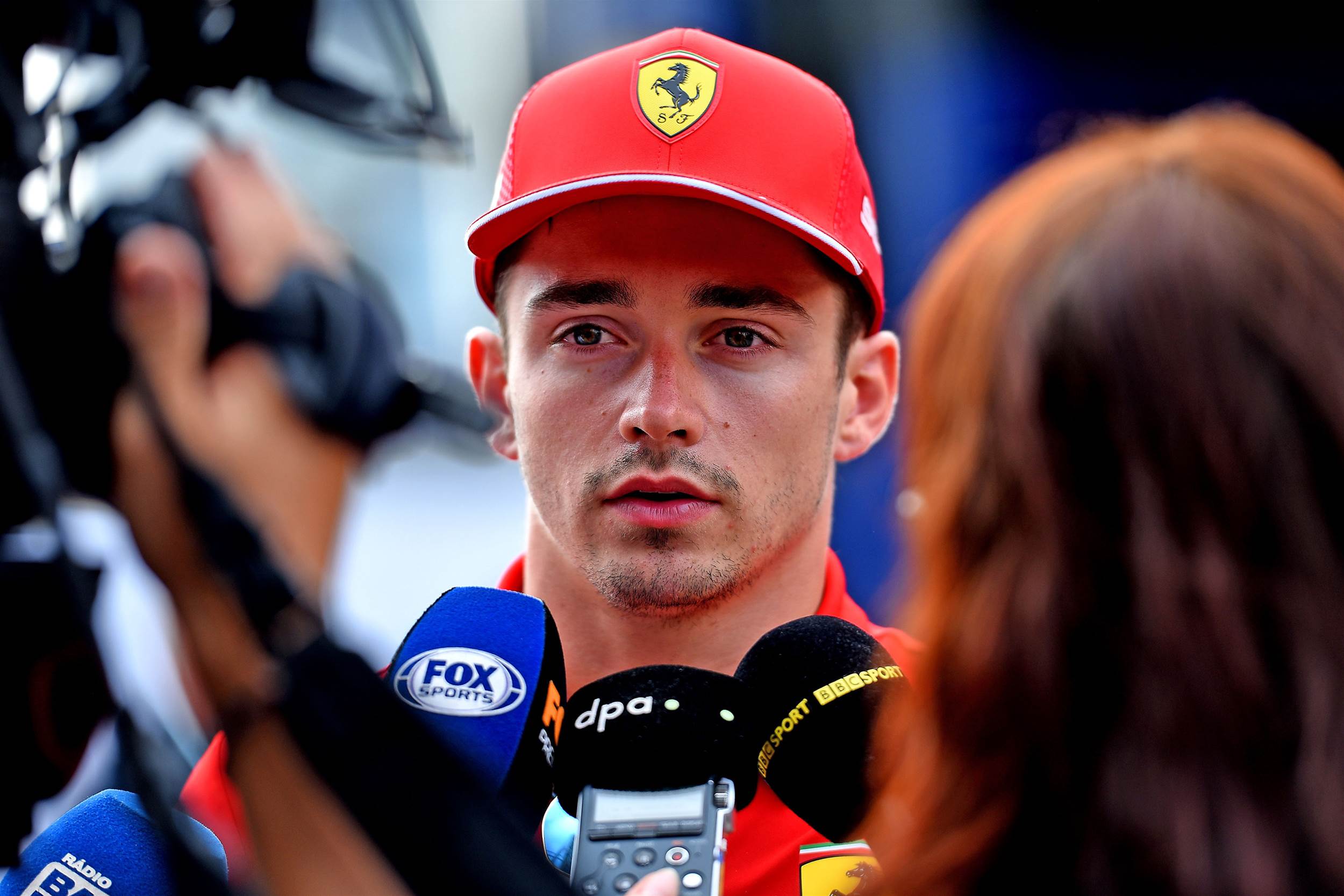
However, both races took a back seat when the world was reminded of the dangers of competing in motorsport, as 22-year-old Formula 2 driver Anthoine Hubert lost his life in a fatal crash at Spa. Leclerc would dedicate his first Formula 1 win to his friend Hubert the following day.
The following week at Monza, the dedications would continue from not only Leclerc but also members of the Formula 1 and wider motorsport community. The Monegasque driver would take pole in qualifying, beating out both Lewis Hamilton and Valtteri Bottas by just under four and five milliseconds respectively. And the race would turn out to be just as entertaining, with Hamilton starting slightly better than Leclerc, attempting to overtake him into the first corner. Leclerc defended, but the battle for the lead was on.
On lap 23, Hamilton attempted again, pulling to Leclerc’s right coming into turns four and five. But as Leclerc recognised the threat at hand, he positioned his car back towards the right side of the track, leaving Hamilton no space and subsequently no chance of overtaking, pushing him off the track and onto the escape road. The move earned Leclerc a black-and-white flag, but more importantly, the raucous support of the Tifosi after seeing the young driver hold his own against the then five-time world champion.
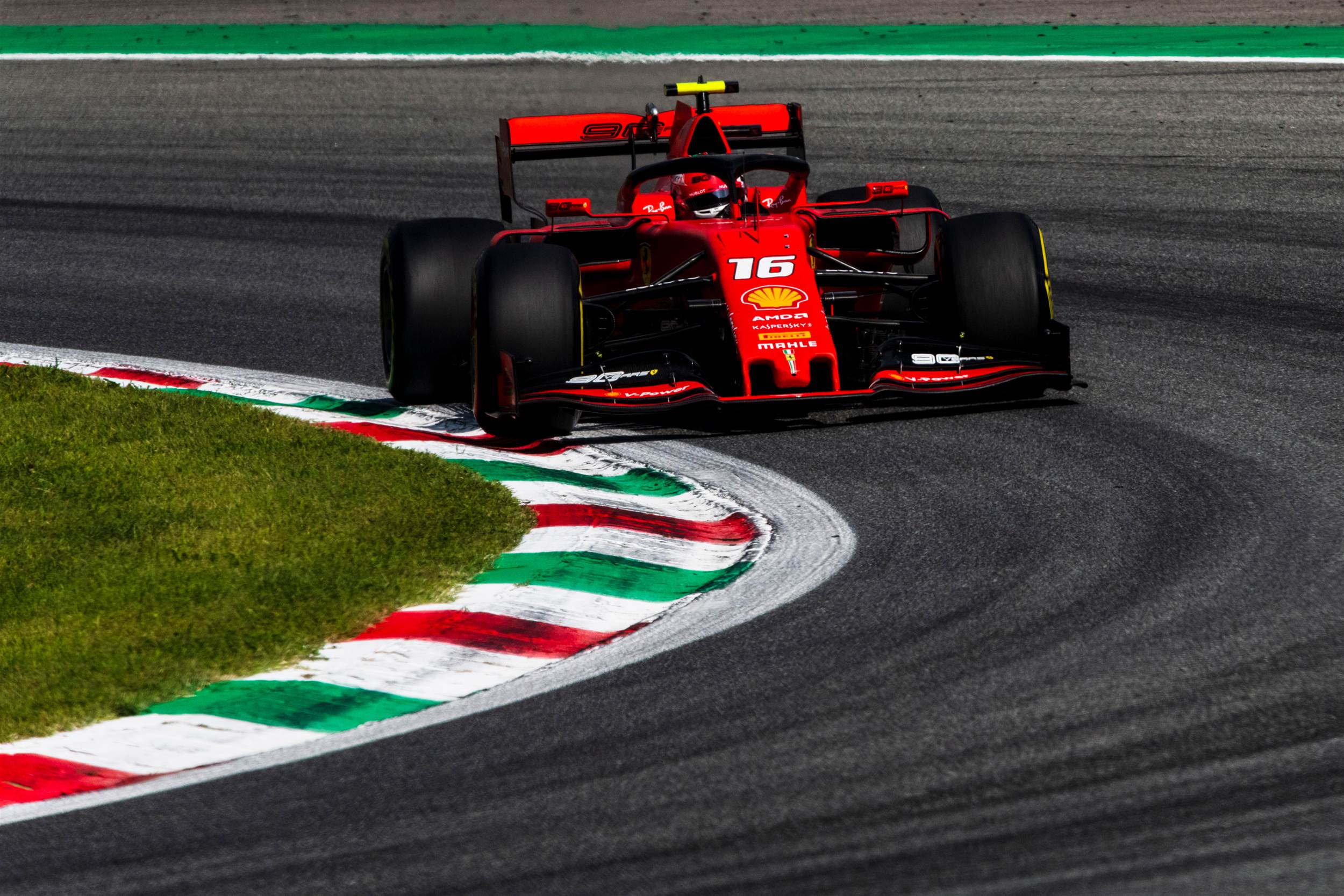
On lap 36, Leclerc invited challenge from Hamilton when he locked up into turn one and cut past the corner but Leclerc’s desperate, defensive zig-zag proved to be enough to hold off Hamilton. From the TV commentary box, Martin Brundle observed that the young Ferrari driver was ‘driving for his life’.
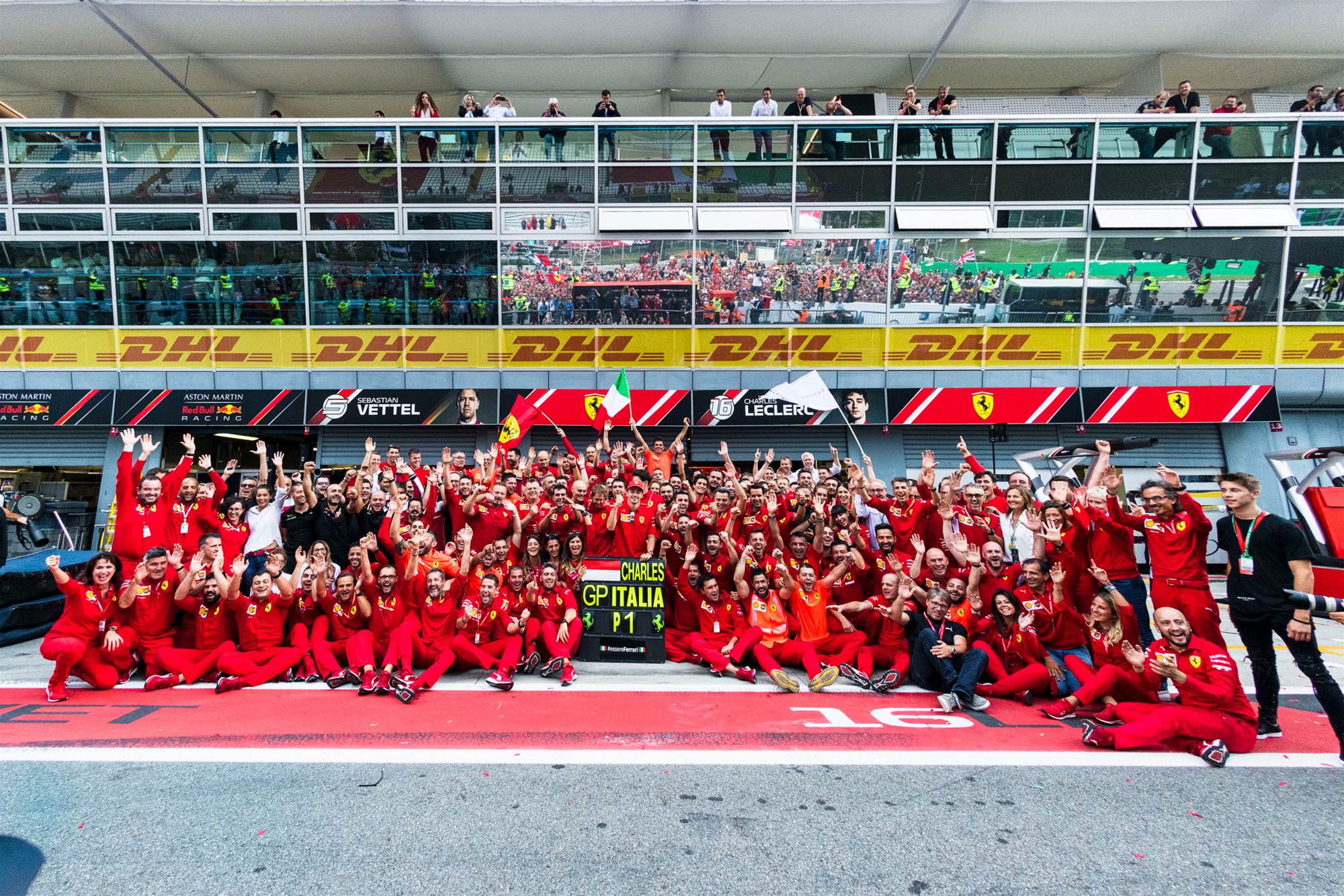
From there, Hamilton’s tyres faded and Leclerc would go on to win his second race, once again dedicating it to Hubert with a message written on his helmet reading ‘RIP TONIO’. Where Leclerc had been subdued at Spa, at Monza he was jubilant, revelling in the moment, screaming across his team radio and fist pumping atop his car. It was a moment neither he nor the flare-brandishing Tifosi will ever forget, as he ended Ferrari’s nine-year winless run at Monza.
Related Articles

Norris unlucky as Antonelli reigns in Spain

Splendour for Spaniards


